BMF Solutions LLP
  • Fire Protection
    • Inspection and Testing
    • Sprinkler System Installation
    • Fire Pump Installation
    • Fire Standpipe Services
    • Fire Water Storage Tanks
    • Service and Repairs
    • System Remodel
    • Retrofit
    • Special Hazard Systems
  • Industries
    • Commercial
    • Schools
    • Hospitality
    • Healthcare
  • Blog
  • About Us
    • Areas We Serve
      • College Station
    • Careers
  • Contact
  • Menu Menu

Fire Protection Challenges Every Healthcare Facility Faces

Healthcare facilities face fire protection challenges that most commercial buildings never encounter, and the consequences of falling short go far beyond a citation. Here is what to watch for and how to stay ahead of it.

Why Fire Protection Is More Complex in Healthcare Settings

Hospitals, outpatient clinics, surgical centers, and senior living communities operate under a level of fire protection pressure that most facility managers in other industries simply do not face. Continuous occupancy, vulnerable patient populations, dense medical equipment, and oversight from multiple regulatory bodies create a fire protection environment where the margin for error is essentially zero.

Understanding the specific fire protection challenges that healthcare environments produce is the first step toward building a program that actually holds up under scrutiny. The sections below break down the most common issues, what each one puts at risk, and what a proactive response looks like.

Challenge 1: Sprinkler Obstruction From Medical Equipment

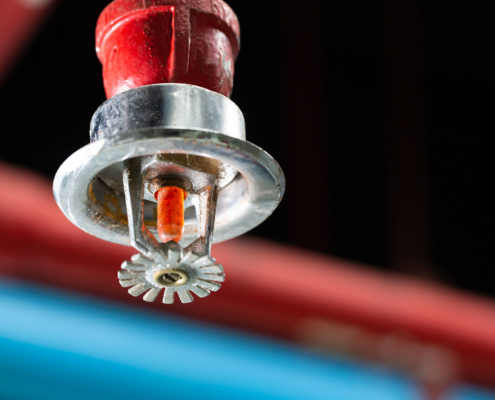
One of the most frequently cited fire code violations in healthcare facilities is obstructed sprinkler heads. In active care environments, portable medical equipment, IV poles, privacy curtains, ceiling-mounted monitors, and temporary storage all create clearance conflicts that facility teams may not notice until an inspector flags them.

NFPA 13 requires a minimum of 18 inches of clearance below every sprinkler head. When that clearance is compromised, the spray pattern is disrupted and coverage gaps open up in areas where fire suppression is most critical. In a healthcare setting, those gaps can affect patient care areas, nurse stations, and medication storage rooms.

Addressing this challenge requires more than a one-time audit. It requires a routine inspection program that keeps clearance compliance embedded in daily facility operations, not just inspection-day preparation.


Challenge 2: Managing Fire Inspection Scheduling Around Patient Care

Fire inspection scheduling is a persistent pain point for healthcare facility managers. Unlike office buildings or retail spaces, healthcare facilities cannot simply shut down a wing or clear a floor to accommodate testing. Patients in active treatment, surgical suites in use, and ICU environments all create scheduling constraints that delay inspections and push testing timelines past their required intervals.

Delayed inspections create healthcare fire protection compliance gaps that compound quickly:

  • A missed quarterly test becomes a documentation gap
  • A documentation gap becomes a finding during a Joint Commission survey
  • A Joint Commission finding triggers a corrective action plan that pulls resources away from operations and puts accreditation at risk

The solution is working with a fire protection contractor who understands how to schedule and execute inspections in healthcare environments without disrupting care. That means flexible scheduling, clear communication with facility management teams, and efficient execution that minimizes the footprint of the inspection on active patient areas.

Challenge 3: Aging System Components That No Longer Meet Code

Many healthcare facilities across Greater Houston operate in buildings that were constructed or last renovated decades ago. Fire protection systems in older facilities may have been compliant at the time of installation but no longer meet current NFPA standards. Aging sprinkler heads, corroded piping, outdated fire pump equipment, and alarm systems that predate current zoning requirements all represent exposure points that routine visual checks will not catch.

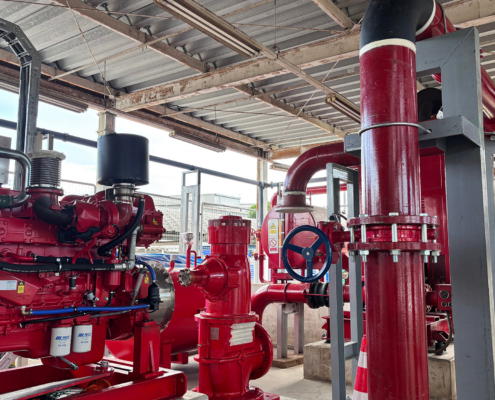
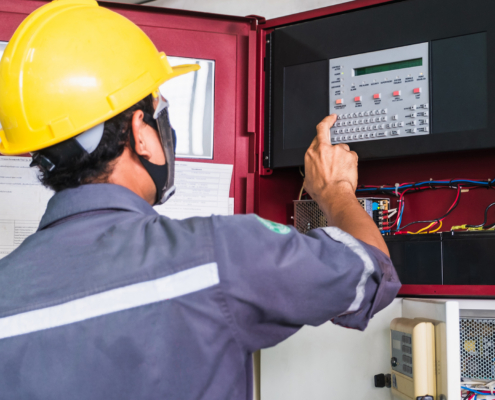
Healthcare facility fire system maintenance for older buildings requires a more rigorous approach. Internal inspections of piping, performance testing of fire pumps, and component-level evaluation of alarm systems are all necessary to confirm that aging infrastructure is still performing to the standard your facility is held to today. Facilities that defer this level of maintenance often discover deficiencies during a regulatory survey rather than during a routine service visit, which is the worst possible time to find out a critical component has degraded.

Explore BMF Solutions’ inspection and testing services to identify and address aging system components before they create a compliance problem.

Our Inspection and Testing Services

Challenge 4: Renovation Work That Disrupts Fire System Coverage

Healthcare facilities renovate frequently. New patient wings, updated surgical suites, reconfigured nurse stations, and expanded diagnostic areas are all common in facilities that are constantly adapting to care demands. Every one of those projects has the potential to compromise existing fire protection system coverage if it is not properly coordinated with the facility’s fire protection contractor.

Managing fire safety in hospitals during active renovation requires careful attention to how changes in ceiling height, wall placement, and room occupancy affect sprinkler coverage zones and alarm system zoning. Common renovation-related fire protection risks include:

  • New walls built through existing sprinkler zones without a corresponding system update
  • Ceiling modifications that change the distance between sprinkler heads and the floor
  • Occupancy reclassifications that require different suppression system configurations
  • Alarm system zoning that no longer reflects the updated floor plan

This is one of the most overlooked fire protection challenges in healthcare because responsibility often falls between the construction team and the facility management team, with neither taking clear ownership of fire system continuity. Working with a licensed contractor who is involved from the planning stage ensures that system remodels stay ahead of renovation activity rather than chasing it after the fact.

Challenge 5: Staff Turnover and Fire Response Readiness

Healthcare facilities have some of the highest staff turnover rates of any industry. Every time a team member leaves and a new one is hired, institutional knowledge about fire response procedures, evacuation routes, and defend-in-place protocols walks out the door. In a facility where full building evacuation is not always possible, staff readiness is not just a training checkbox. It is a critical component of the fire protection program.

Patient evacuation fire safety planning is only as effective as the staff executing it. When turnover is high and fire response training is inconsistent, the gap between what the emergency plan says should happen and what actually happens in a fire event widens significantly. Joint Commission surveys and CMS Conditions of Participation reviews both examine whether staff can demonstrate knowledge of fire response procedures, and deficiencies in this area are cited regularly.

Challenge 6: Pressure From Multiple Regulatory Bodies

Most commercial facility managers answer to one primary regulatory authority. Healthcare facility managers answer to several simultaneously. The Joint Commission, the Centers for Medicare and Medicaid Services, state health departments, and local fire marshals all have fire protection requirements that must be met, and they do not always align perfectly.

A facility that satisfies local AHJ requirements may still receive a finding from The Joint Commission if documentation practices do not meet accreditation standards. Navigating this regulatory complexity requires a fire protection partner who understands the full compliance landscape, not just the local fire code. BMF Solutions works with healthcare facilities across Greater Houston to ensure that inspection documentation, system maintenance records, and deficiency correction timelines satisfy every level of regulatory review your facility faces.

Partner With BMF Solutions for Healthcare Fire Protection

The fire protection challenges healthcare facilities face are real, they are ongoing, and they require a partner who understands the environment well enough to stay ahead of them. BMF Solutions brings 20 years of experience, a licensed team of fire protection professionals, and a proven approach to inspection, testing, and system maintenance that keeps healthcare facilities across Greater Houston protected and compliant. Be proactive. Contact BMF Solutions today and let our experts handle all your fire protection needs.

Fire Protection Challenges Every Healthcare Facility Faces

Healthcare facilities face fire protection challenges that most commercial buildings never encounter, and the consequences of falling short go far beyond a citation. Here is what to watch for and how to stay ahead of it.

Why Fire Protection Is More Complex in Healthcare Settings

Hospitals, outpatient clinics, surgical centers, and senior living communities operate under a level of fire protection pressure that most facility managers in other industries simply do not face. Continuous occupancy, vulnerable patient populations, dense medical equipment, and oversight from multiple regulatory bodies create a fire protection environment where the margin for error is essentially zero.

Understanding the specific fire protection challenges that healthcare environments produce is the first step toward building a program that actually holds up under scrutiny. The sections below break down the most common issues, what each one puts at risk, and what a proactive response looks like.

Challenge 1: Sprinkler Obstruction From Medical Equipment

One of the most frequently cited fire code violations in healthcare facilities is obstructed sprinkler heads. In active care environments, portable medical equipment, IV poles, privacy curtains, ceiling-mounted monitors, and temporary storage all create clearance conflicts that facility teams may not notice until an inspector flags them.

NFPA 13 requires a minimum of 18 inches of clearance below every sprinkler head. When that clearance is compromised, the spray pattern is disrupted and coverage gaps open up in areas where fire suppression is most critical. In a healthcare setting, those gaps can affect patient care areas, nurse stations, and medication storage rooms.

Addressing this challenge requires more than a one-time audit. It requires a routine inspection program that keeps clearance compliance embedded in daily facility operations, not just inspection-day preparation.
Challenge 2: Managing Fire Inspection Scheduling Around Patient Care

Fire inspection scheduling is a persistent pain point for healthcare facility managers. Unlike office buildings or retail spaces, healthcare facilities cannot simply shut down a wing or clear a floor to accommodate testing. Patients in active treatment, surgical suites in use, and ICU environments all create scheduling constraints that delay inspections and push testing timelines past their required intervals.

Delayed inspections create healthcare fire protection compliance gaps that compound quickly:

  • A missed quarterly test becomes a documentation gap
  • A documentation gap becomes a finding during a Joint Commission survey
  • A Joint Commission finding triggers a corrective action plan that pulls resources away from operations and puts accreditation at risk

The solution is working with a fire protection contractor who understands how to schedule and execute inspections in healthcare environments without disrupting care. That means flexible scheduling, clear communication with facility management teams, and efficient execution that minimizes the footprint of the inspection on active patient areas.

Challenge 3: Aging System Components That No Longer Meet Code

Many healthcare facilities across Greater Houston operate in buildings that were constructed or last renovated decades ago. Fire protection systems in older facilities may have been compliant at the time of installation but no longer meet current NFPA standards. Aging sprinkler heads, corroded piping, outdated fire pump equipment, and alarm systems that predate current zoning requirements all represent exposure points that routine visual checks will not catch.

Healthcare facility fire system maintenance for older buildings requires a more rigorous approach. Internal inspections of piping, performance testing of fire pumps, and component-level evaluation of alarm systems are all necessary to confirm that aging infrastructure is still performing to the standard your facility is held to today. Facilities that defer this level of maintenance often discover deficiencies during a regulatory survey rather than during a routine service visit, which is the worst possible time to find out a critical component has degraded.

Explore BMF Solutions’ inspection and testing services to identify and address aging system components before they create a compliance problem.

Our Inspection and Testing Services

Challenge 4: Renovation Work That Disrupts Fire System Coverage

Healthcare facilities renovate frequently. New patient wings, updated surgical suites, reconfigured nurse stations, and expanded diagnostic areas are all common in facilities that are constantly adapting to care demands. Every one of those projects has the potential to compromise existing fire protection system coverage if it is not properly coordinated with the facility’s fire protection contractor.

Managing fire safety in hospitals during active renovation requires careful attention to how changes in ceiling height, wall placement, and room occupancy affect sprinkler coverage zones and alarm system zoning. Common renovation-related fire protection risks include:

  • New walls built through existing sprinkler zones without a corresponding system update
  • Ceiling modifications that change the distance between sprinkler heads and the floor
  • Occupancy reclassifications that require different suppression system configurations
  • Alarm system zoning that no longer reflects the updated floor plan

This is one of the most overlooked fire protection challenges in healthcare because responsibility often falls between the construction team and the facility management team, with neither taking clear ownership of fire system continuity. Working with a licensed contractor who is involved from the planning stage ensures that system remodels stay ahead of renovation activity rather than chasing it after the fact.

Challenge 5: Staff Turnover and Fire Response Readiness

Healthcare facilities have some of the highest staff turnover rates of any industry. Every time a team member leaves and a new one is hired, institutional knowledge about fire response procedures, evacuation routes, and defend-in-place protocols walks out the door. In a facility where full building evacuation is not always possible, staff readiness is not just a training checkbox. It is a critical component of the fire protection program.

Patient evacuation fire safety planning is only as effective as the staff executing it. When turnover is high and fire response training is inconsistent, the gap between what the emergency plan says should happen and what actually happens in a fire event widens significantly. Joint Commission surveys and CMS Conditions of Participation reviews both examine whether staff can demonstrate knowledge of fire response procedures, and deficiencies in this area are cited regularly.

Challenge 6: Pressure From Multiple Regulatory Bodies

Most commercial facility managers answer to one primary regulatory authority. Healthcare facility managers answer to several simultaneously. The Joint Commission, the Centers for Medicare and Medicaid Services, state health departments, and local fire marshals all have fire protection requirements that must be met, and they do not always align perfectly.

A facility that satisfies local AHJ requirements may still receive a finding from The Joint Commission if documentation practices do not meet accreditation standards. Navigating this regulatory complexity requires a fire protection partner who understands the full compliance landscape, not just the local fire code. BMF Solutions works with healthcare facilities across Greater Houston to ensure that inspection documentation, system maintenance records, and deficiency correction timelines satisfy every level of regulatory review your facility faces.

Partner With BMF Solutions for Healthcare Fire Protection

The fire protection challenges healthcare facilities face are real, they are ongoing, and they require a partner who understands the environment well enough to stay ahead of them. BMF Solutions brings 20 years of experience, a licensed team of fire protection professionals, and a proven approach to inspection, testing, and system maintenance that keeps healthcare facilities across Greater Houston protected and compliant. Be proactive. Contact BMF Solutions today and let our experts handle all your fire protection needs.

Share This Post

  • Share on Facebook
  • Share on X
  • Share on Pinterest
  • Share on LinkedIn
  • Share on Tumblr
  • Share on Vk
  • Share on Reddit
  • Share by Mail

More Like This

worker installing fire sprinkler pipe system

Why Fire Protection Planning Belongs at the Start of Your Project

Fire Protection, new construction
https://www.bmfsolutions.com/wp-content/uploads/2026/05/worker-installing-fire-sprinkler-pipe-system.jpg 1250 2000 Abstrakt Marketing /wp-content/uploads/2023/11/BMF-Solutions-Logo.jpeg Abstrakt Marketing2026-05-07 11:10:302026-06-11 07:44:16Why Fire Protection Planning Belongs at the Start of Your Project
Electrical engineer inspecting fire extinguisher

What Happens If You Skip Your Annual Fire System Inspection: Risk Evaluation

Inspection and Testing
https://www.bmfsolutions.com/wp-content/uploads/2026/05/Electrical-engineer-inspecting-fire-extinguisher.jpg 1250 2000 Abstrakt Marketing /wp-content/uploads/2023/11/BMF-Solutions-Logo.jpeg Abstrakt Marketing2026-05-01 08:58:352026-05-06 13:35:41What Happens If You Skip Your Annual Fire System Inspection: Risk Evaluation
Healthcare Fire Safety Requirements

Healthcare Fire Safety Requirements Every Facility Needs to Know

Healthcare
https://www.bmfsolutions.com/wp-content/uploads/2026/04/Healthcare-Fire-Safety-Requirements.jpg 1250 2000 Abstrakt Marketing /wp-content/uploads/2023/11/BMF-Solutions-Logo.jpeg Abstrakt Marketing2026-04-04 21:35:352026-05-06 13:35:41Healthcare Fire Safety Requirements Every Facility Needs to Know
Fire Sprinkler Inspection Process Explained Step-by-Step

Fire Sprinkler Inspection Process Explained Step-by-Step

Inspection and Testing
https://www.bmfsolutions.com/wp-content/uploads/2026/03/Fire-Sprinkler-Inspection-Process-Explained-Step-by-Step.jpg 1250 2000 Abstrakt Marketing /wp-content/uploads/2023/11/BMF-Solutions-Logo.jpeg Abstrakt Marketing2026-03-23 20:42:482026-05-06 13:35:41Fire Sprinkler Inspection Process Explained Step-by-Step

A Guide to Fire Safety Compliance and Fire Protection Inspections 

Inspection and Testing
https://www.bmfsolutions.com/wp-content/uploads/2026/03/Legal-Compliance-and-Fire-Protection-Inspections.jpg 1250 2000 Abstrakt Marketing /wp-content/uploads/2023/11/BMF-Solutions-Logo.jpeg Abstrakt Marketing2026-03-13 14:34:192026-05-06 13:35:41A Guide to Fire Safety Compliance and Fire Protection Inspections 

What to Expect During a Fire Sprinkler Inspection at Your Hotel

Hospitality, Inspection and Testing
https://www.bmfsolutions.com/wp-content/uploads/2026/03/What-to-Expect-During-a-Fire-Sprinkler-Inspection-at-Your-Hotel.jpg 1250 2000 Abstrakt Marketing /wp-content/uploads/2023/11/BMF-Solutions-Logo.jpeg Abstrakt Marketing2026-03-13 14:15:152026-05-06 13:35:41What to Expect During a Fire Sprinkler Inspection at Your Hotel

Fire Sprinkler Maintenance Checklist for Hospitality Facilities

Fire Protection
https://www.bmfsolutions.com/wp-content/uploads/2026/03/Fire-Sprinkler-Maintenance-Checklist-for-Hospitality-Facilities.jpg 1250 2000 Abstrakt Marketing /wp-content/uploads/2023/11/BMF-Solutions-Logo.jpeg Abstrakt Marketing2026-03-13 14:08:572026-05-06 13:35:42Fire Sprinkler Maintenance Checklist for Hospitality Facilities
Commercial Fire Sprinkler System Failures: Causes, Risks, and Prevention

Commercial Fire Sprinkler System Failures: Causes, Risks, and Prevention

Inspection and Testing
https://www.bmfsolutions.com/wp-content/uploads/2026/03/Commercial-Fire-Sprinkler-System-Failures-Causes-Risks-and-Prevention.jpg 1250 2000 Abstrakt Marketing /wp-content/uploads/2023/11/BMF-Solutions-Logo.jpeg Abstrakt Marketing2026-03-02 08:41:432026-05-06 13:35:42Commercial Fire Sprinkler System Failures: Causes, Risks, and Prevention
What the Houston Fire Code Means for Your Commercial Property

What the Houston Fire Code Means for Your Commercial Property

Inspection and Testing
https://www.bmfsolutions.com/wp-content/uploads/2026/03/What-the-Houston-Fire-Code-Means-for-Your-Commercial-Property.jpg 1250 2000 Abstrakt Marketing /wp-content/uploads/2023/11/BMF-Solutions-Logo.jpeg Abstrakt Marketing2026-03-02 08:20:572026-05-06 13:35:42What the Houston Fire Code Means for Your Commercial Property
Previous Previous Previous Next Next Next

Categories

  • Education
  • Fire Protection
    • Inspection and Testing
  • Fire Pump
  • Fire Safety
  • Fire Standpipe
  • Fire System
  • Healthcare
  • Hospitality
  • new construction
  • Regulations and Compliance
  • Retrofit
  • Schools
  • Sprinkler System Installation
  • Standpipe Systems
  • Winterization

Contact Us

"*" indicates required fields

Location

Address
13602 Jarvis Road
Cypress, Texas 77429

Get In Touch

Phone
832-220-1500

Email
info@bmfsolutions.com

Services

Inspections and Testing 

Sprinkler Installation

Service and Repairs

Special Hazard Systems

About Us

BMF Solutions is a family-owned, family-oriented, full-service fire sprinkler contractor with broad industry expertise.

Learn More
Website by Abstrakt Marketing Group ©
  • Sitemap
  • Privacy Policy
Link to: What Happens If You Skip Your Annual Fire System Inspection: Risk Evaluation Link to: What Happens If You Skip Your Annual Fire System Inspection: Risk Evaluation What Happens If You Skip Your Annual Fire System Inspection: Risk Evaluatio...Electrical engineer inspecting fire extinguisher Link to: Why Fire Protection Planning Belongs at the Start of Your Project Link to: Why Fire Protection Planning Belongs at the Start of Your Project worker installing fire sprinkler pipe systemWhy Fire Protection Planning Belongs at the Start of Your Project
Scroll to top Scroll to top Scroll to top

This site uses cookies. By continuing to browse the site, you are agreeing to our use of cookies.

AcceptLearn more

Cookie and Privacy Settings


How we use cookies

We may request cookies to be set on your device. We use cookies to let us know when you visit our websites, how you interact with us, to enrich your user experience, and to customize your relationship with our website.

Click on the different category headings to find out more. You can also change some of your preferences. Note that blocking some types of cookies may impact your experience on our websites and the services we are able to offer.

Essential Website Cookies

These cookies are strictly necessary to provide you with services available through our website and to use some of its features.

Because these cookies are strictly necessary to deliver the website, refusing them will have impact how our site functions. You always can block or delete cookies by changing your browser settings and force blocking all cookies on this website. But this will always prompt you to accept/refuse cookies when revisiting our site.

We fully respect if you want to refuse cookies but to avoid asking you again and again kindly allow us to store a cookie for that. You are free to opt out any time or opt in for other cookies to get a better experience. If you refuse cookies we will remove all set cookies in our domain.

We provide you with a list of stored cookies on your computer in our domain so you can check what we stored. Due to security reasons we are not able to show or modify cookies from other domains. You can check these in your browser security settings.

Other external services

We also use different external services like Google Webfonts, Google Maps, and external Video providers. Since these providers may collect personal data like your IP address we allow you to block them here. Please be aware that this might heavily reduce the functionality and appearance of our site. Changes will take effect once you reload the page.

Google Webfont Settings:

Google Map Settings:

Google reCaptcha Settings:

Vimeo and Youtube video embeds:

Accept settingsHide notification only